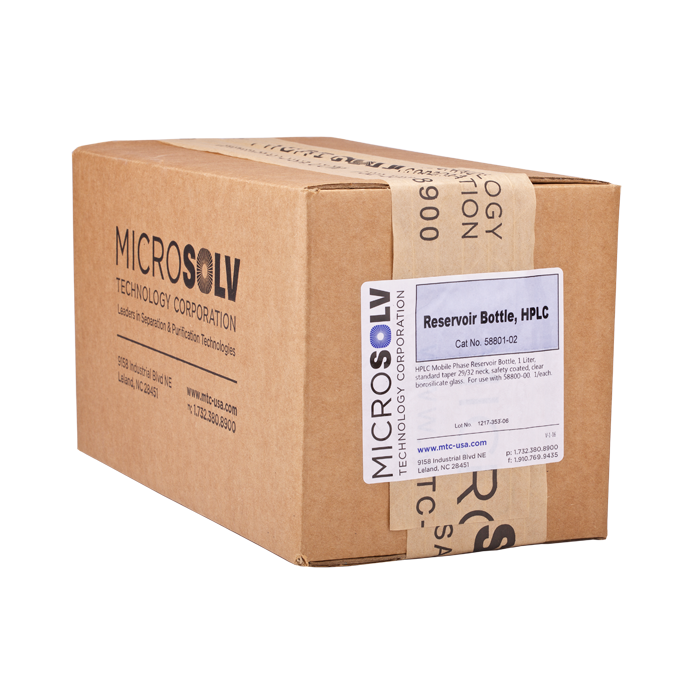
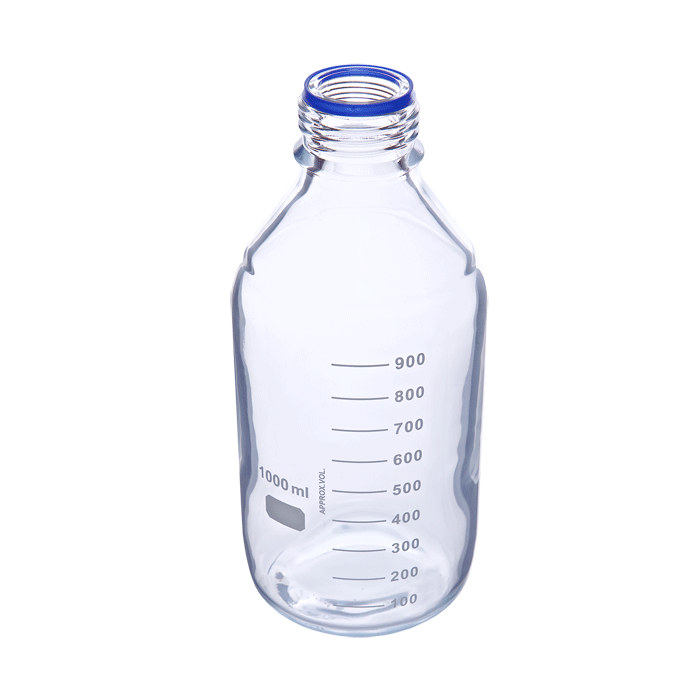
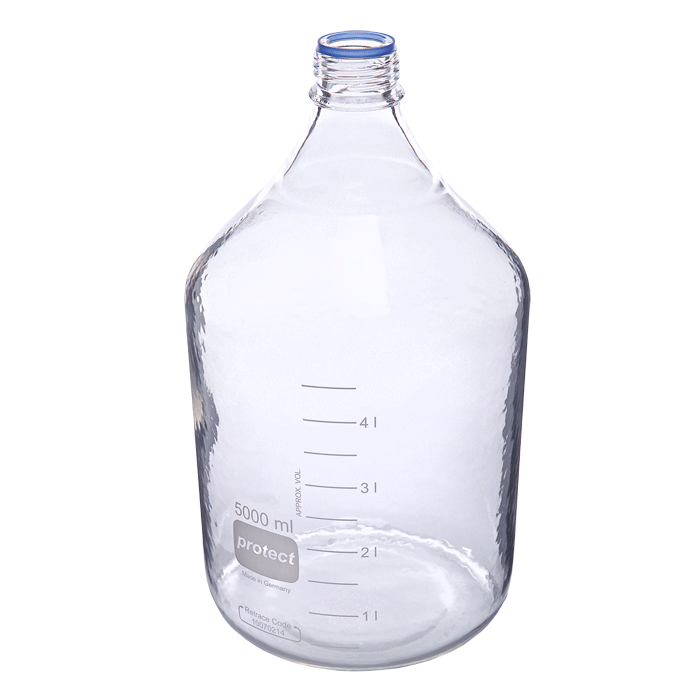
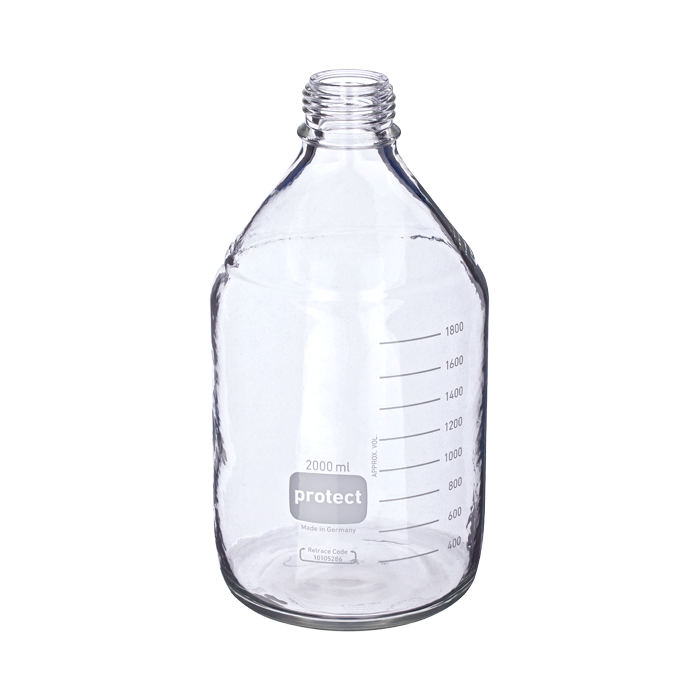
Non‑coated mobile‑phase bottles are used as solvent reservoirs for HPLC, UHPLC, and LC‑MS systems, supporting accurate and reproducible chromatographic performance. This category includes clear and amber borosilicate glass bottles designed for preparation, storage, and delivery of aqueous and organic mobile phases in analytical laboratories.
These bottles are manufactured from borosilicate 3.3 glass, offering excellent chemical resistance, low extractables, and dimensional stability across a wide range of solvents and buffers. Non‑coated glass bottles are commonly selected for applications requiring autoclavability, reusability, and direct visual inspection of solvent contents.
Material & Performance Characteristics
Borosilicate 33 glass provides high thermal stability and chemical durability
Low leachables and extractables, suitable for sensitive chromatographic workflows
Effective gas barrier properties, supporting solvent integrity over time
Autoclavable and reusable, suitable for long‑term laboratory use
These characteristics support consistent mobile‑phase quality and reliable solvent delivery to chromatography systems.
Configuration & Compatibility
Non‑coated mobile‑phase bottles in this category are available with:
GL45 or GL32 threaded necks for compatibility with common solvent delivery caps and fittings
Clear or amber glass to support light‑sensitive solvents and buffers
A wide range of volumes, from small‑scale laboratory use to large‑capacity solvent reservoirs
Bottles are designed for compatibility with standard chromatography hardware and solvent pickup assemblies commonly used in HPLC and LC‑MS systems.
Temperature & Sterilization Capability
Glass bottles withstand temperatures from –70 °C to 500 °C
Polypropylene caps are suitable for elevated temperatures up to 140 °C
Bottles may be autoclaved or dry‑heat sterilized, supporting clean solvent preparation and reuse
Typical Applications
Non‑coated borosilicate mobile‑phase bottles are commonly used for:
HPLC and UHPLC mobile‑phase reservoirs
LC‑MS solvent delivery
Buffer preparation and storage
Analytical, regulated, and research laboratory workflows